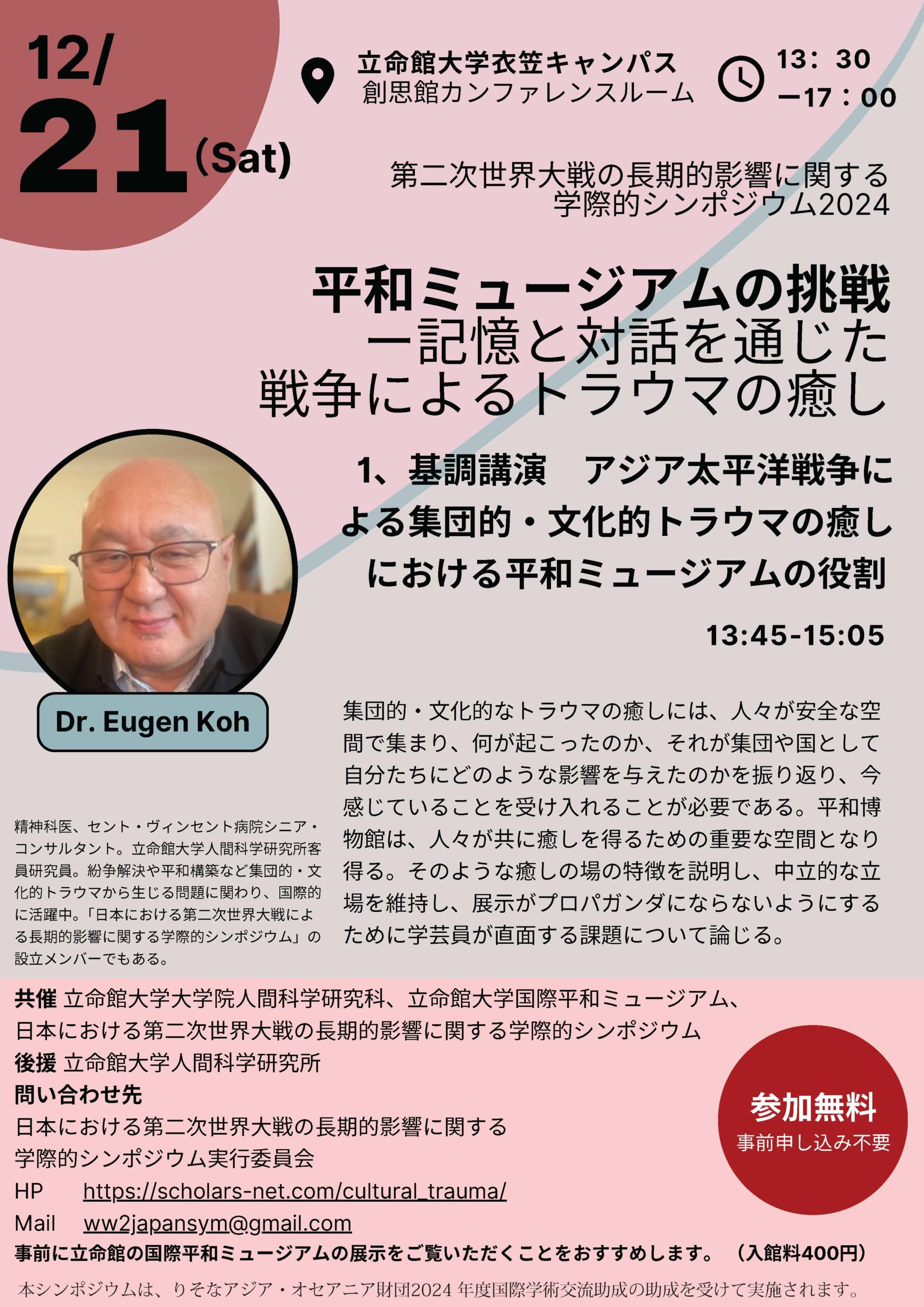

The Challenge of the Peace Museum: Healing the Trauma of War through Memory and Dialogue
 Purpose
The scars of war are passed down through generations, profoundly affecting individuals and communities. This symposium will explore themes of war, collective and cultural trauma, and the transmission of memory. Through deepening dialogue, we aim to confront the past, share painful memories, and seek a path toward peace.
Date and Time
Saturday, December 21, 13:30-17:00
Venue
Kinugasa Campus
Program Schedule
13:30
Opening Remarks
Greeting by Mr. Haruhiko Kimishima, Director, International Peace Museum
13:45-15:05
Keynote Speech: “The Role of Peace Museums in Healing the Collective and Cultural Trauma from the Asia-Pacific War” (Consecutive interpretation provided)
Speaker: Dr. Eugen Koh (Psychiatrist, Senior Consultant at St. Vincent’s Hospital, Visiting Researcher at the Institute of Human Sciences, Ritsumeikan University)
Abstract:
Healing from collective and cultural trauma requires creating a safe space where people can reflect on the past, process its impact on them as individuals and as a nation, and acknowledge their current feelings. Peace museums serve as crucial spaces for collective healing. This presentation will discuss the characteristics of such healing environments and explore the challenges curators face in maintaining neutrality and preventing exhibits from becoming propaganda.
Profile:
Dr. Koh is a psychiatrist and Senior Consultant at St. Vincent’s Hospital and a visiting researcher at the Institute of Human Sciences, Ritsumeikan University. He is internationally active in fields such as conflict resolution and peacebuilding and is a founding member of the Interdisciplinary Symposium on the Long-Term Effects of World War II in Japan.
15:05-15:15
Break
15:15-16:25
Presentations by Symposiasts
- 15:15-15:45
Miki Taguwa (Curator, Kyoto Museum for World Peace, Ritsumeikan University)
Presentation: “Communicating and Exhibiting Materials: The Work of the Peace Museum”
Abstract:
Museum for World Peace, Ritsumeikan University houses over 40,000 items. This presentation examines how these materials have been preserved and explores plans for their future transmission. Through exhibitions and museum activities, we will delve into the emotions and thoughts of those who contributed these items.
Profile:
M.A. in National History from Ryukoku University. After working with the Japan Overseas Cooperation Volunteers (JOCV) at the Karak Castle Archaeological Museum in Jordan and with the Tottori City Cultural Foundation and the Tottori City Museum of History, she joined this Museum in 2017.
- 15:45-16:25
Yoshikazu Hara (Film Director/Filmmaker)
Presentation: “Lost Memories of War: Intricate Assault and Damage in Films in the Making”
Abstract:
Can transmitting history through film aid in the healing of trauma? War-related memories are often accompanied by silence. Many soldiers who participated in the invasion of mainland China suppressed their trauma, depriving both themselves and society of healing. Today, the deep shadows cast by war trauma persist. This presentation explores the potential of film to excavate forgotten memories, sharing them with society as a path toward true resolution and healing.
Profile:
Born in Nagoya City, Aichi Prefecture, in 1969, Yoshikazu Hara has lived and worked in Okinawa since 2005, producing documentary films. His notable works include “Songs of the Battlefield: The Heartbreaking Reality and History of Former Comfort Women” and “Born Again: The Life of Painter Masako R. Summers.” In 2021, he released “Songs Before Dawn: The Erased Disabled of Okinawa.”
Resona Asia-Oceania Foundation, 2024 International Academic Exchange Grant